FROM AWARENESS TO ACTION: HOW SWAAADO IS REWRITING NIGERIA’S WATERWAY SAFETY STORY
Special Report, Waterways Safety Campaings LASWA, NIMASA, NIWA, swaaado, waterways safety campaign
SPECIAL REPORT • THURSDAY, FEBRUARY 19, 2026
FROM AWARENESS TO ACTION: HOW SWAAADO IS REWRITING NIGERIA’S WATERWAY SAFETY STORY
As Nigeria stands on the cusp of a transformational era for its 10,000-kilometre inland waterway network, one civil society organization is steering the nation toward a future where no life is lost needlessly on the water. SWAAADO’s growing footprint — and its determined alignment with the Nigerian Waterways Directory initiative — may be exactly the catalyst the sector has long needed.
By Chukwuemeka Obi, Senior Correspondent — Waterways & Maritime Affairs.
Additional Reporting: Oghenewoke Onoriode, Lagos Waterfront Desk
Published: waterwaysnews.ng | February 19, 2026
LAGOS — On a misty Tuesday morning along the Onisiwo Island waterfront in Lagos State, life jacket-clad community safety officers fan out among the wooden jetties, speaking to fishermen, market women, and boat operators in Yoruba and pidgin English. Behind them, a banner bears a simple but urgent message: “Saving Lives on Our Waterways.” This is SWAAADO at work.
The Sustainable Waterways Awareness Advancement and Advocacy Organization — known by its acronym SWAAADO — has, in a relatively short span, grown from a passionate idea among concerned maritime safety advocates and community development professionals into one of Nigeria’s most consequential civil society actors in the inland waterways sector. Its trajectory, its wins, and its ambitious vision for the future offer a compelling case study in what determined advocacy combined with grassroots action can achieve.
THE BURNING NEED: NIGERIA’S WATERWAY SAFETY CRISIS
Nigeria sits atop one of Africa’s most extensive inland waterway systems. From the mighty Niger-Benue river confluence to the labyrinthine creeks of the Niger Delta, from the Cross River in the south-east to the Lagos Lagoon in the south-west, waterways serve as the primary — sometimes the only — corridors of transport, commerce, and daily livelihood for tens of millions of Nigerians.
Yet for decades, this vast liquid infrastructure has remained tragically underserved by safety culture, regulatory enforcement, and public awareness. Overloaded wooden boats ferry dozens of passengers without a single life jacket on board. Night journeys are undertaken on dark, unmarked waterways without any lighting equipment. Boat operators who have never received a day of formal training navigate treacherous currents with reckless routine. The results have been catastrophic.
In just the first two months of 2026, Nigeria recorded at least one major mass-casualty waterway disaster: the Kebbi State wedding boat tragedy of February 14, in which 14 lives — many of them celebrating a wedding — were swallowed by the Niger River after an overloaded vessel capsized near Yauri. It was a scene of grief and preventability that SWAAADO’s investigative desk documented in unflinching detail. It was also, tragically, not exceptional. Nigeria’s waterways claim hundreds of lives every year in incidents that share the same root causes: ignorance, indifference, weak enforcement, and absent infrastructure.
“Every accident we document is a policy failure. Every life lost is a system that refused to protect its own people. We are here to change that system.”
SWAAADO was born precisely from this urgency. Founded by maritime safety advocates, community leaders, and development professionals who refused to accept that preventable deaths were inevitable, the organisation has built its entire philosophy around a conviction stated plainly on its website: the needless loss of life on Nigeria’s waterways must end.
SWAAADO: THE ARCHITECTURE OF AN IMPACT ORGANISATION
What distinguishes SWAAADO from many civil society organizations is not merely its purpose, but its method. The organization does not operate from a distance. Its programs are designed to penetrate the last mile — to reach the fisherman on the Benue, the market trader crossing the Calabar estuary, the schoolchild living on the riverine margins of Bayelsa State.
Community Safety Education
At the foundation of SWAAADO’s programming is a grassroots education model delivered in local languages across waterfront communities. Boat operators, traders, fishermen, and daily commuters receive hands-on training covering vessel handling, emergency response, weather awareness, proper passenger management, and basic equipment maintenance. No one is considered beyond reach or too peripheral to matter.
The organization’s school-based water safety program targets an even more vulnerable population — children in waterfront communities who grow up swimming, playing, and working on water. Through partnerships with schools, SWAAADO teaches recognition of danger signs, basic swimming awareness, and rescue skills. It also runs a Women’s Safety Networks initiative, recognising that women — as frequent waterway traders and community moral authorities — are uniquely positioned to become safety ambassadors and agents of behavioural change.
Life-Saving Equipment Distribution
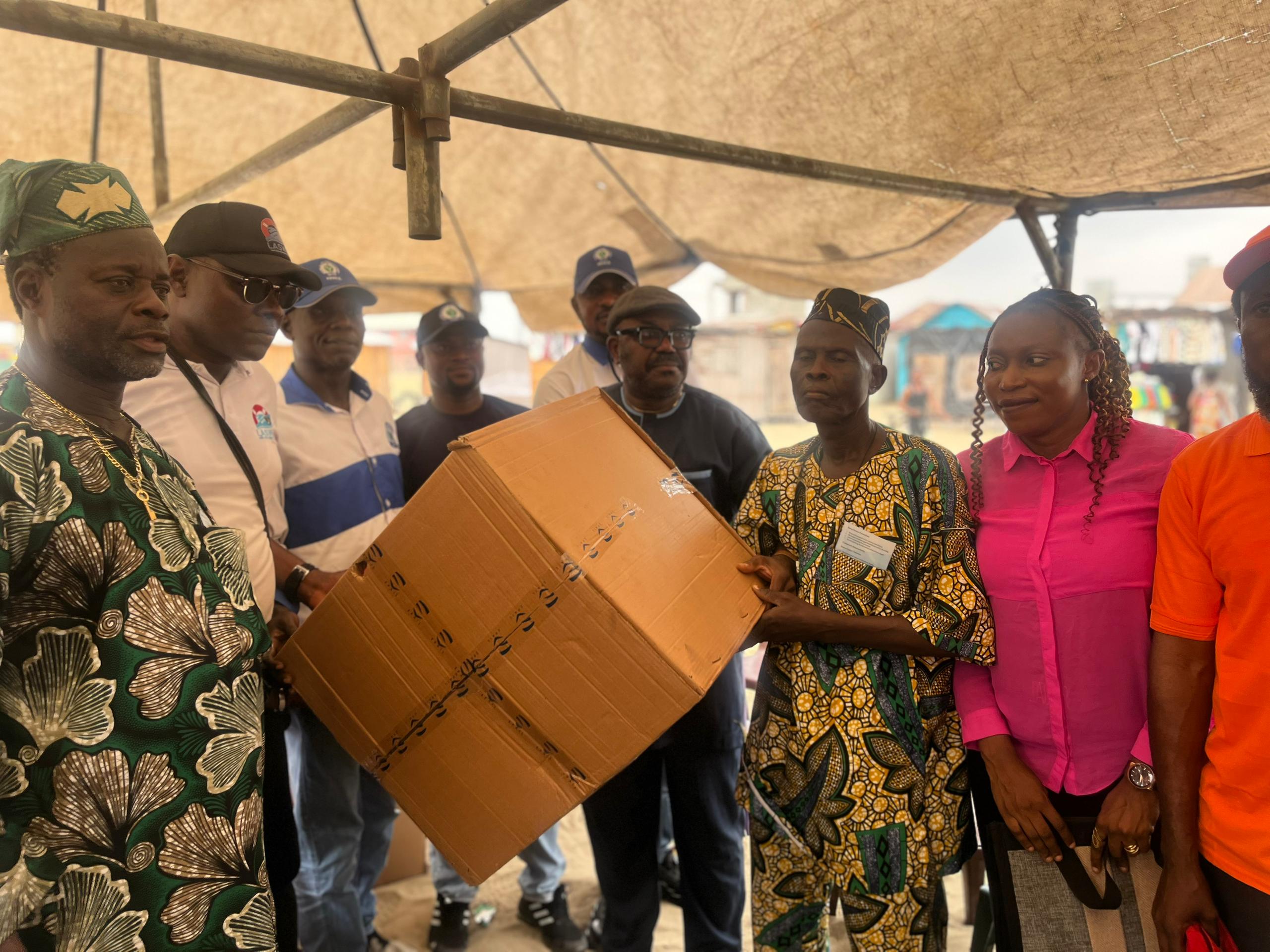
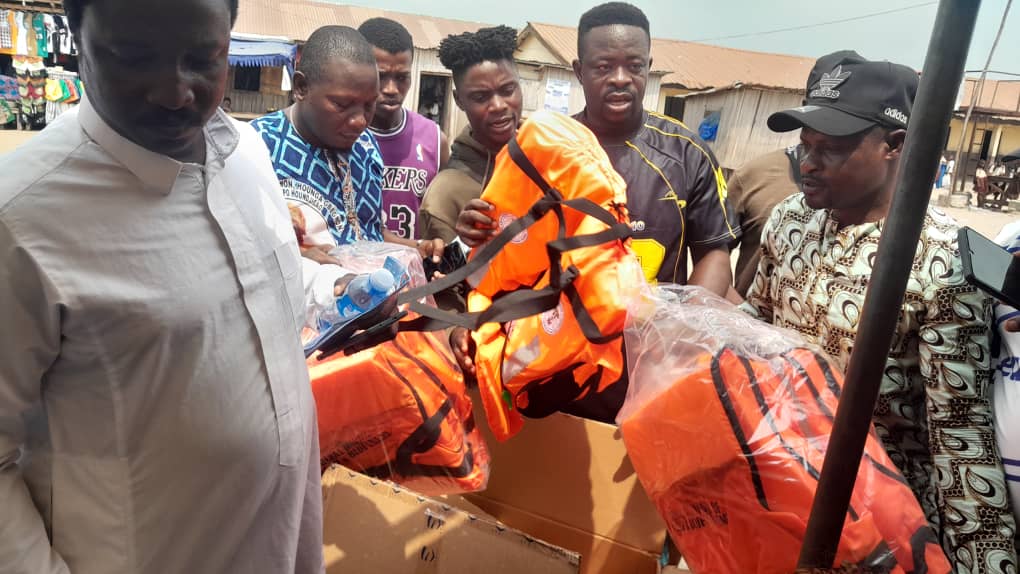
Awareness without material support is incomplete advocacy. SWAAADO has accordingly made equipment distribution a core pillar of its work. To date, the organization has distributed 2,000 certified life jackets across communities in six Nigerian states, prioritizing children, pregnant women, the elderly, and users of high-risk routes. Emergency kits — containing first aid supplies, waterproof flashlights, communication devices, and rescue tools — are also provided to boat operators. Through strategic partnerships, SWAAADO supports low-income operators in upgrading their vessels with proper lighting and safety features.
Policy Advocacy and Legislative Engagement
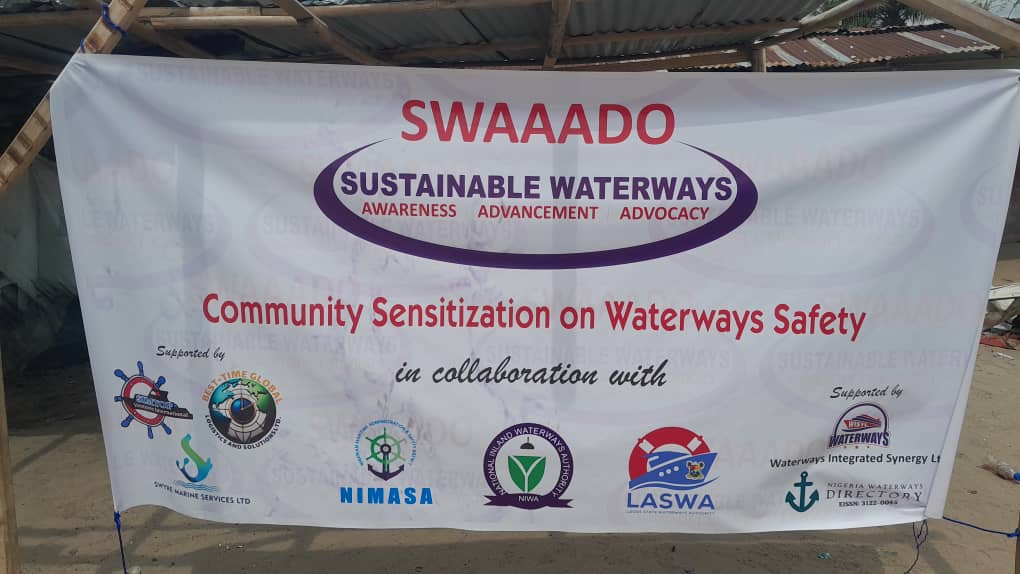
SWAAADO does not limit its ambitions to the waterfront. The organization engages directly with lawmakers at state and federal levels, pressing for stronger waterway safety legislation, improved maritime infrastructure budgets, and more robust enforcement mechanisms. It partners formally with the National Inland Waterways Authority (NIWA), the Lagos State Waterways Authority (LASWA), and the Nigerian Maritime Administration and Safety Agency (NIMASA) — among others — to improve standards and close regulatory gaps.
Crucially, SWAAADO produces detailed policy briefs and feasibility studies grounded in real incident data and community feedback. It monitors government commitments, tracks implementation timelines, and holds duty-bearers publicly accountable through media engagement and transparent reporting. This combination of technical credibility and public accountability gives SWAAADO’s advocacy a potency rare among Nigerian civil society actors.
Research, Documentation, and Incident Intelligence
Knowledge is power, and SWAAADO is systematically building Nigeria’s most comprehensive civilian database of waterway incidents. By tracking accident patterns — identifying high-risk routes, seasonal vulnerabilities, common causative factors, and systemic enforcement gaps — the organization creates an evidence base that informs both its own programming and national policy advocacy. This research capacity also enables SWAAADO to engage credibly with international development organizations and institutional partners.
Environmental Innovation: The Water Hyacinth Control Project
In a creative departure that underscores SWAAADO’s systems-thinking approach, the organization has launched a Water Hyacinth Control Project. The invasive aquatic weed, which chokes Nigeria’s rivers and creeks, impedes navigation, disrupts fishing, and creates hidden hazards for waterway users. SWAAADO harvests the weed and converts it into biofuel and artisan fibre for handicraft production, simultaneously restoring waterway navigability, creating environmental benefit, and generating economic value for riverside communities. It is a model of impact that speaks to the interconnectedness of safety, ecology, and livelihoods.
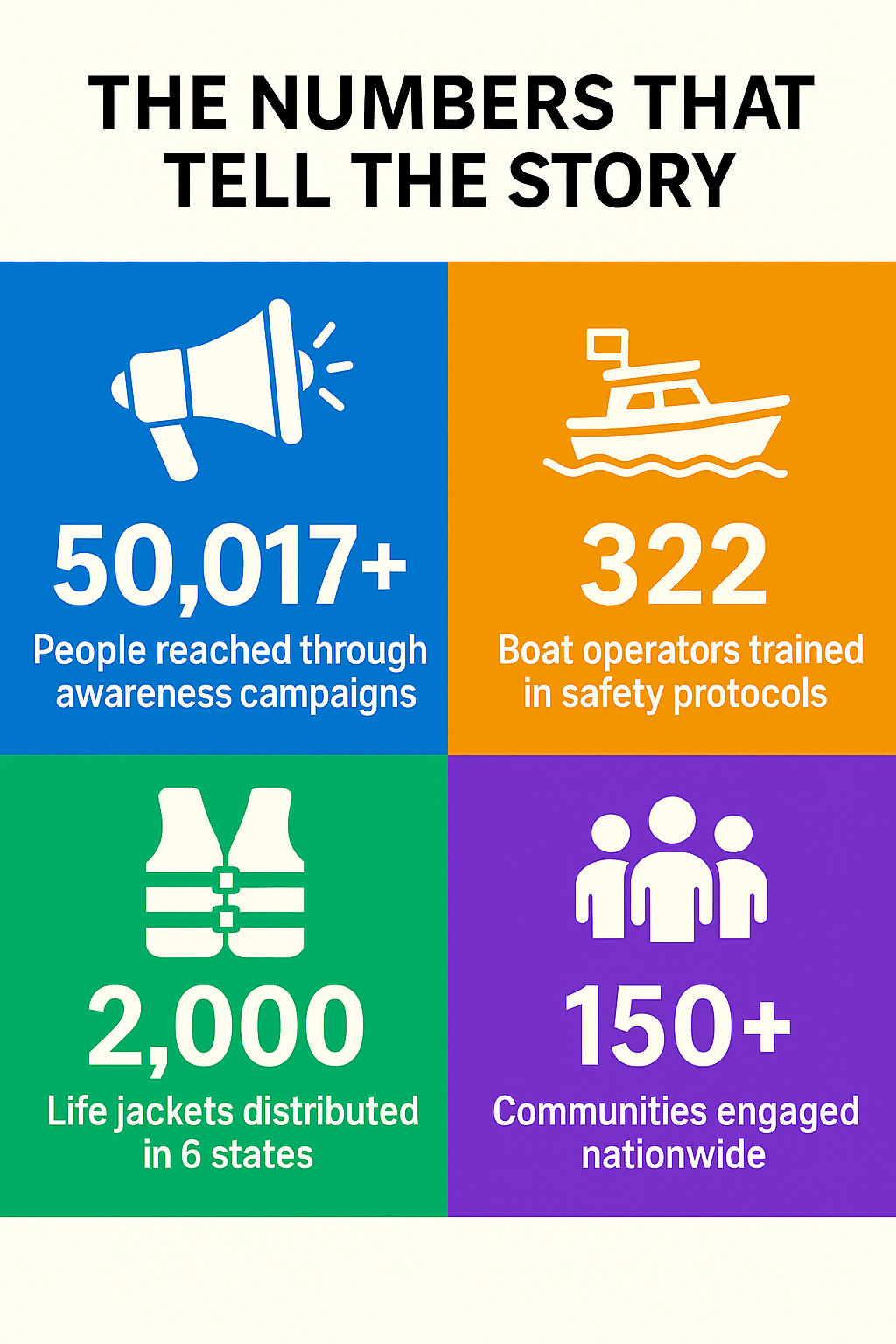
These figures, while already significant, represent the beginning rather than the ceiling of SWAAADO’s stated ambitions. Its 100-Community Waterway Safety Campaign, launched in February 2026 with key stakeholder support, is designed to systematically extend this footprint across Nigeria’s most at-risk waterfront communities.
THE DIRECTORY DIMENSION: SWAAADO AND THE NIGERIAN WATERWAYS DIRECTORY
Perhaps the most strategically significant dimension of SWAAADO’s growing influence lies in its alignment with the Nigerian Waterways Directory — an emerging infrastructure of information that, if fully realized, could become the nation’s definitive navigational and operational resource for the waterways sector.
The concept of a comprehensive Nigerian Waterways Directory represents a monumental opportunity. Such a directory would map and catalogue the full spectrum of Nigeria’s inland waterway network: routes and their risk classifications, licensed operators and their compliance status, jetty and terminal infrastructure, emergency response points, regulatory authorities, service providers, community safety committees, and critical navigation hazards. It would constitute, in essence, the missing connective tissue of a sector that has long operated in fragmented, poorly documented silos.
“A fully utilized Nigerian Waterways Directory would do for our inland waterways what Google Maps did for road transport. It would make the invisible, visible — and the unsafe, accountable.”
SWAAADO’s advocacy and research capacity positions it as a natural and necessary partner in the Directory’s full utilization. The organization already maintains incident databases, community engagement records, and high-risk area mapping that would directly feed into the Directory’s intelligence layer. Its network of community safety committees and boat operator associations provides a ground-level verification and reporting infrastructure that no government agency alone could replicate.
More importantly, SWAAADO’s policy advocacy work gives the Directory a fighting chance of becoming more than a data archive. The organization’s engagement with NIWA, LASWA, and state maritime agencies creates the institutional linkages necessary to ensure that Directory data is not only collected but acted upon — that high-risk routes identified in the Directory trigger regulatory inspections, that underequipped operators flagged in the system receive support and training, that black spots documented in the incident database become priority targets for infrastructure investment.
IF THE ADVOCACY SUCCEEDS: PROJECTING THE TRANSFORMATIONAL IMPACTS
Asking what Nigeria’s waterways sector would look like if SWAAADO’s advocacy goals were fully achieved — and if the Nigerian Waterways Directory were comprehensively utilized in connection with that advocacy — is not an exercise in fantasy. It is a serious policy scenario with measurable, life-changing implications across multiple dimensions of national development.
- A Dramatic Reduction in Waterway Fatalities
The most immediate and humanly significant impact would be a verifiable reduction in preventable deaths and injuries on Nigeria’s waterways. Evidence from comparable interventions in Bangladesh, Cambodia, and the Philippines — countries with similarly dense inland waterway populations — suggests that sustained community safety education combined with life jacket distribution and regulatory enforcement can reduce accident fatalities by 40 to 60 percent within five years. Applied to Nigeria’s context, this would translate to hundreds of lives saved annually. Over a decade, the cumulative figure would be in the thousands. These are not statistics. They are mothers, children, traders, and fishermen who come home.
- Unlocking Nigeria’s Blue Economy Potential
Nigeria’s waterways represent a largely untapped economic corridor. Freight logistics, passenger transportation, fishing, aquaculture, tourism, and water-based hospitality are all sectors that would expand dramatically in a safer, better-regulated waterway environment. The Nigerian Waterways Directory, fully utilised, would provide investors, logistics companies, tourism operators, and government planners with the navigational and commercial intelligence needed to confidently commit capital to waterway-dependent enterprises. SWAAADO’s advocacy for improved regulatory standards would simultaneously reduce the reputational and operational risk that has historically deterred private sector investment. The economic multiplier effects — in employment, freight cost reduction, trade expansion, and GDP contribution — would be substantial.
- Decongestion of Road Infrastructure
Nigeria’s road infrastructure is under immense and worsening pressure. Fully navigable, safe inland waterways could divert significant freight and passenger traffic from roads, particularly in the Niger Delta, the South-East, and the Lagos metropolitan corridor. This modal shift would extend road lifespans, reduce fuel consumption, lower logistics costs, and ease urban traffic congestion — particularly in Lagos, where water transport remains scandalously underutilised relative to its potential. SWAAADO’s work creating confidence in waterway safety is a prerequisite for this shift.
- Empowerment of Riverine Communities
For communities whose isolation is a function not of distance but of inaccessibility, safe and reliable waterway transport is transformational. Access to healthcare, education, markets, and government services — all gated today by the dangerous unpredictability of waterway travel — would be expanded. SWAAADO’s community safety committee model would simultaneously build local governance capacity, creating a new generation of waterfront community leaders equipped to advocate for their own development needs and hold authorities accountable.
- Environmental Sustainability and Ecological Restoration
A regulated, safety-conscious waterway sector is also a more environmentally responsible one. Reduced illegal dumping, better enforcement of vessel emission standards, and the expansion of SWAAADO’s Water Hyacinth Control Project would contribute to ecological restoration of Nigeria’s rivers and creeks — improving water quality, restoring fish populations, and protecting the biodiversity on which millions of riverside Nigerians depend for food security.
- Nigeria’s International Maritime Standing
A transformed domestic waterway safety culture would also strengthen Nigeria’s credentials in regional and international maritime governance. As Africa’s largest economy, Nigeria’s leadership on inland waterway safety — evidenced by measurable outcomes, robust civil society engagement, and a functional national directory — would position the country as a model for the continent and a credible partner for international maritime institutions, development banks, and climate finance mechanisms.
A MOVEMENT GAINING MOMENTUM
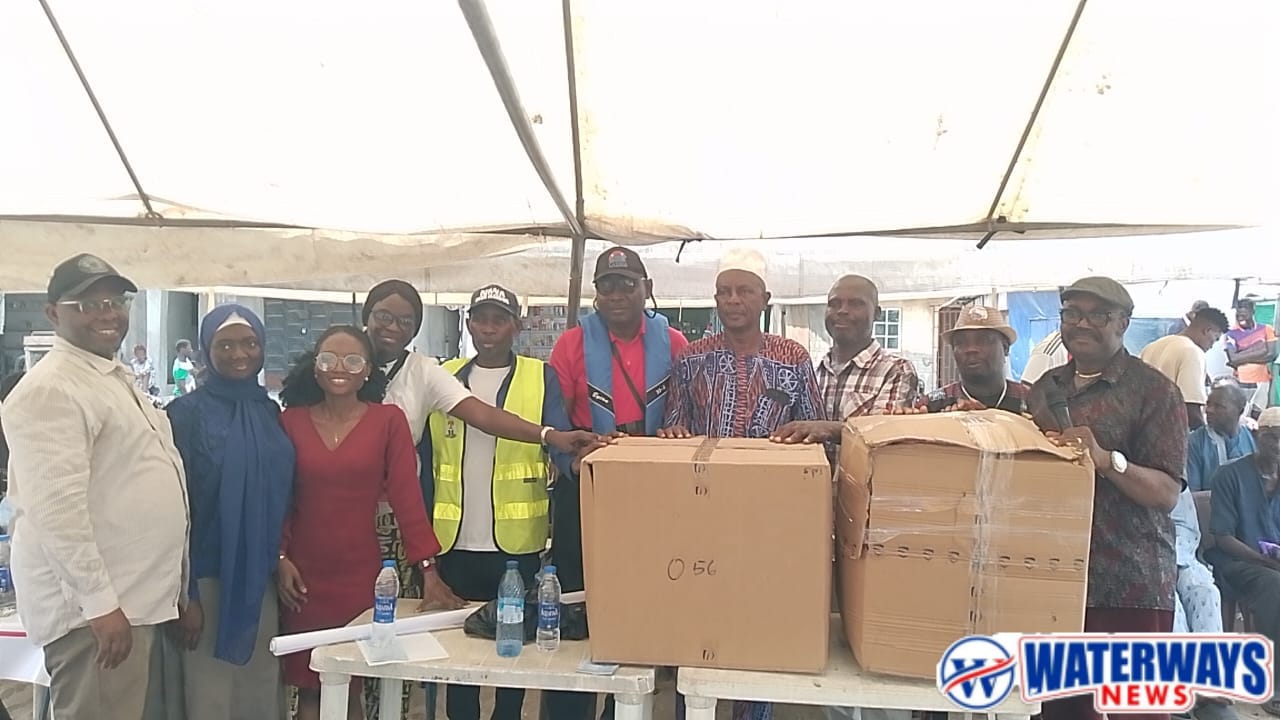
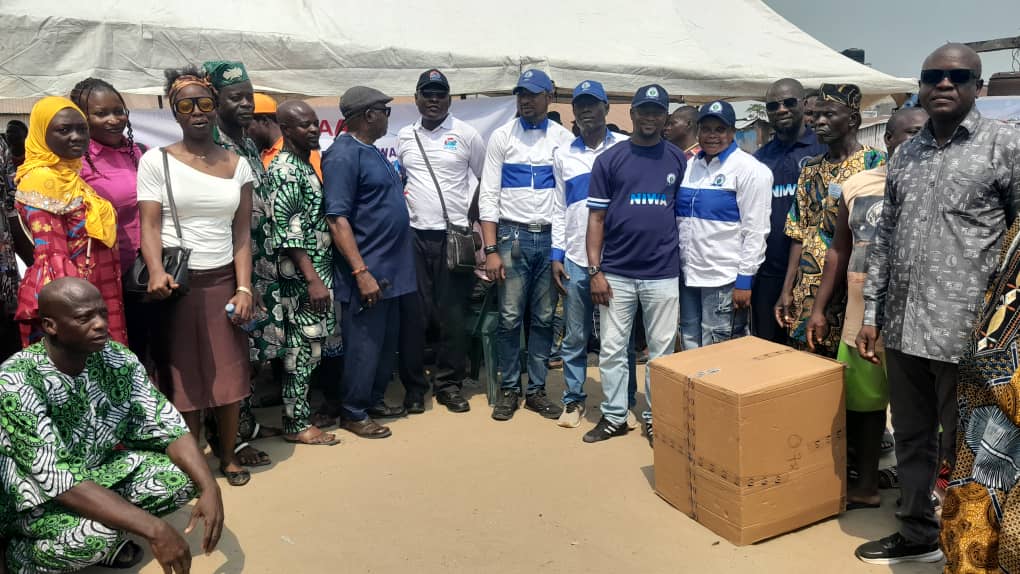
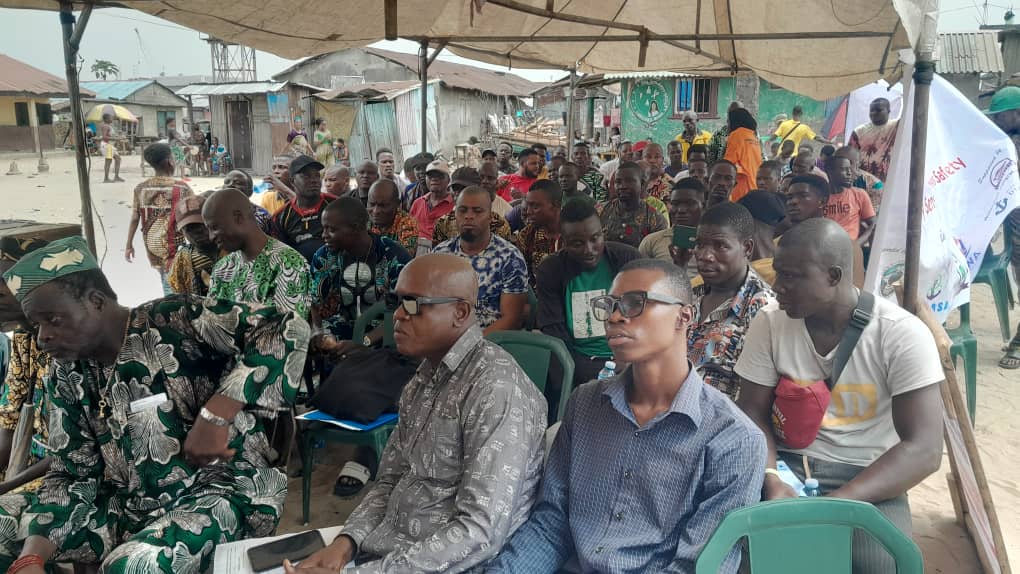
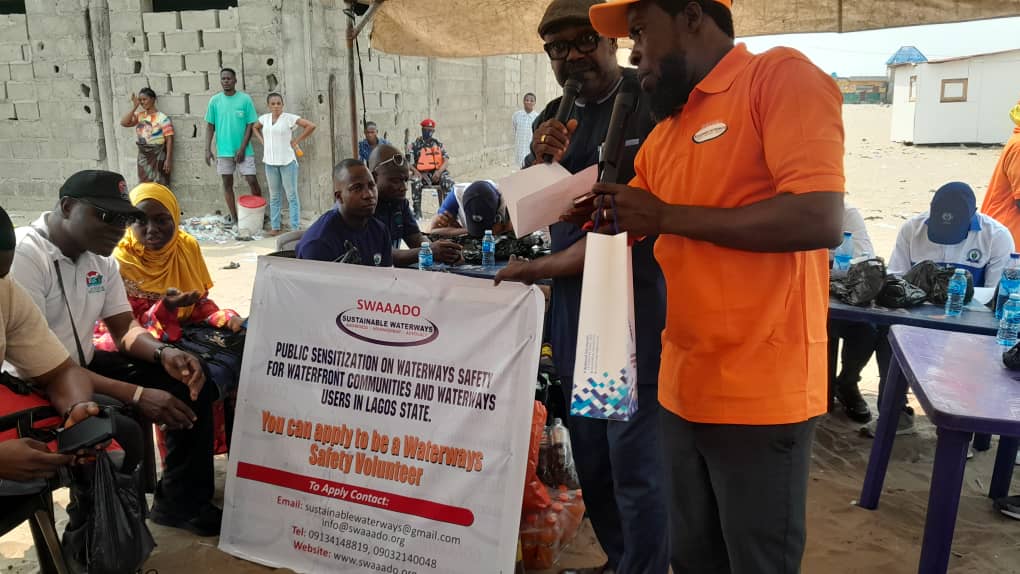
The February 2026 Lagos waterfront campaign, conducted with the visible support of NIWA and LASWA officials, illustrated the growing institutional confidence in SWAAADO’s work. Over 130 persons — boat drivers, fishermen, community leaders, traders, and commuters — participated in what SWAAADO’s COO, Osaweren Larry O. described as “one of many steps in a long walk toward zero preventable waterway deaths in Nigeria.”
The organizations’ award and recognition program, which publicly celebrates individuals and institutions advancing waterway safety, has added a dimension of positive reinforcement that complements its accountability and enforcement advocacy. In a sector where good actors are rarely celebrated and bad actors rarely sanctioned, this deliberate creation of reputational incentives is quietly reshaping professional norms.
“When we celebrate a boat operator who maintains life jackets for every passenger on every trip, we are not just honouring one man. We are setting a standard for every waterway in Nigeria.”
SWAAADO’s leadership — including CVO and Head of Corporate Communications & Strategy Raymond Gold O., Board of Trustees Chairman Alhaji Muhammed Abubakar, and South-South Research/Campaign Head Comrade Elijah Ologe — have built an organisation that combines the passion of activism with the rigour of evidence-based programming. It is a combination that donor agencies, government partners, and affected communities have all responded to with growing trust.
THE CALL: JOIN A MOVEMENT THAT MATTERS
SWAAADO is explicit that its work cannot succeed without broad solidarity. The organization invites waterway users, community leaders, concerned citizens, corporate partners, journalists, and government officials to engage with its mission in concrete ways: to volunteer, donate, advocate, partner, and — perhaps most powerfully — to tell others.
For a nation that loses too many of its children, its traders, its fishermen, and its dreamers to water that should be a highway and not a grave, SWAAADO’s work is not a nice-to-have. It is a national necessity. And the Nigerian Waterways Directory, fully activated in partnership with such organizations, is the infrastructure of information that can translate advocacy into accountability, and accountability into lives saved.
Nigeria’s waterways have waited long enough. The time for safe, sustainable, and fully utilized water transport corridors is now. SWAAADO is doing the work. The question is whether the rest of Nigeria — its government, its private sector, its media, and its citizens — will join them.
CONTACT SWAAADO: sustainablewaterways@gmail.com | +234 903 214 0048 | www.swaaado.org
To donate, volunteer, or partner with SWAAADO,
visit HERE to get involved
For editorial enquiries about this report, contact the waterwaysnews.ng newsroom.